

High-intensity body contouring systems
Professional EMS platforms for demanding body-sculpting schedules.
Discuss the quoted EMS / HI-EMT mode, channel architecture, applicator mix and cooling approach around the booking pattern your team plans to support.
Request EMS engineering specs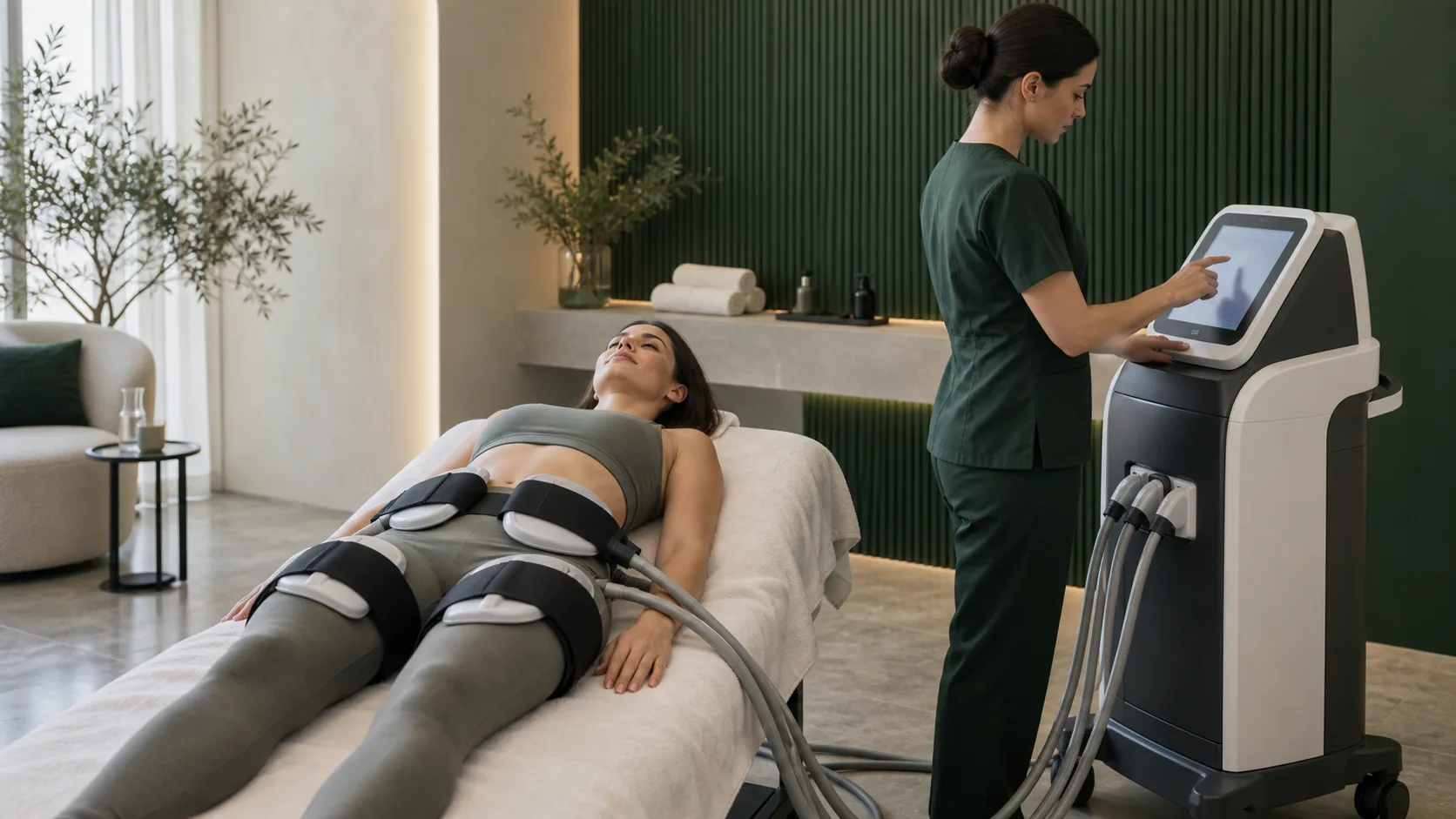
Thermal-management check
Confirm the cooling architecture, supported applicator count and 110V/220V destination configuration for the selected model.
Channel architecture
Choose the channel layout your treatment room can monitor.
Applicator count affects appointment flow and operator oversight. Compare the channel layout against the areas you plan to serve and the routine your team can actually manage.
Multi-channel configuration
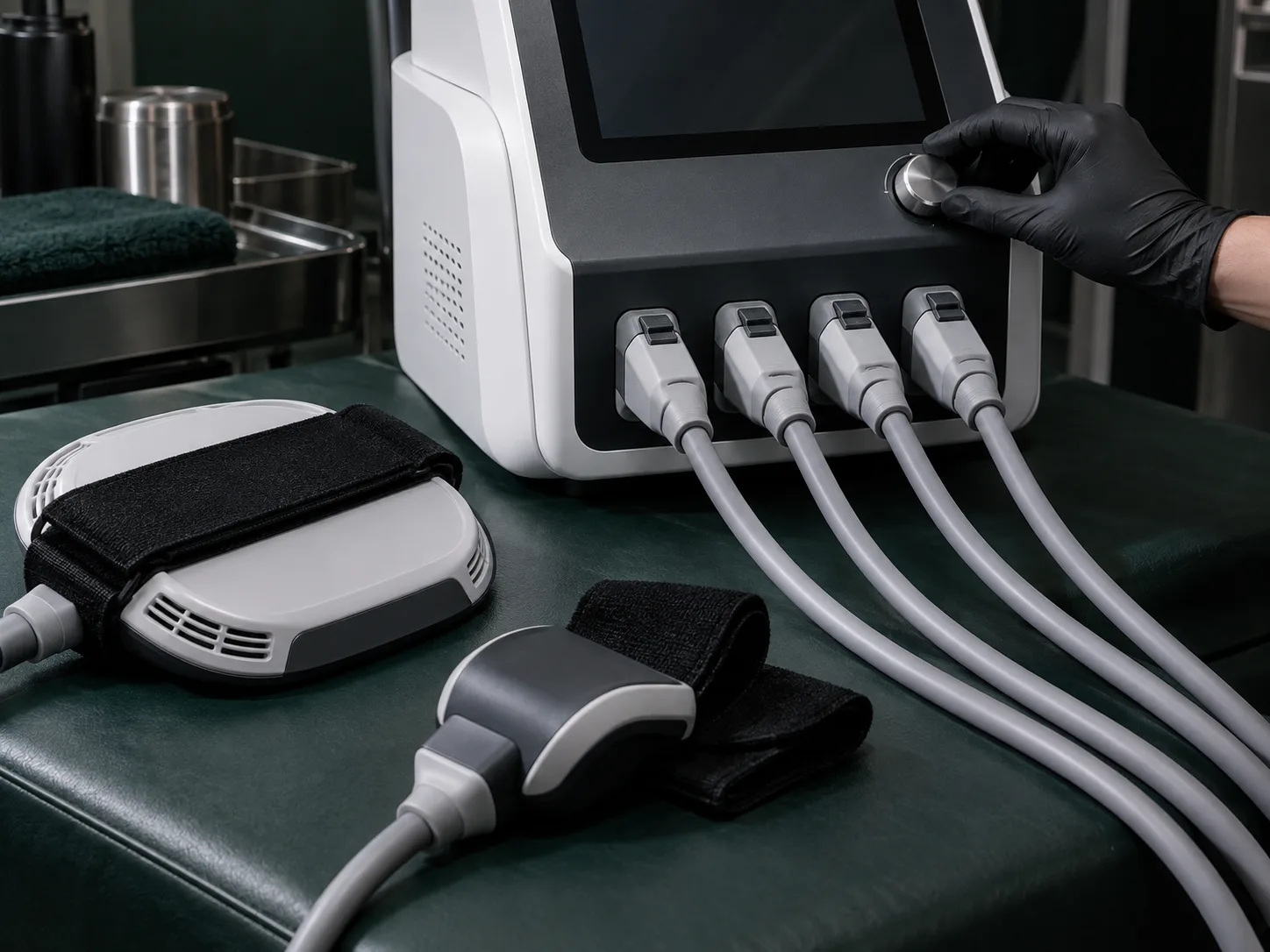
Confirm the controls and applicator mix for each planned route.
Review supplied applicators, securing straps, channel controls and placement guidance alongside the daily schedule your team intends to run. Exact control behaviour is model-specific.
Channel control: verify whether independent settings are available for the quoted ports and workflow.
Contoured vs flat paddles: compare applicator form and intended body areas against the selected configuration.
Securing harnesses: review strap material, adjustment method, cleaning guidance and replacement planning.
Hands-free workflow
A monitored protocol with a clear room-reset routine.
A professional EMS service relies on trained assessment, model-specific placement and active monitoring. Automation can support the operator, but it does not remove those responsibilities.
01 / STRAP & SELECT
Prepare the planned route.
Follow the selected model’s user guidance for client screening, applicator placement, strap adjustment, connections and program selection.
02 / MONITOR
Run with oversight.
Use the applicable interface and documented protocol. Monitor placement, client comfort and model-specific stop guidance throughout the service.
03 / SANITIZE & RESET
Clean, inspect & store.
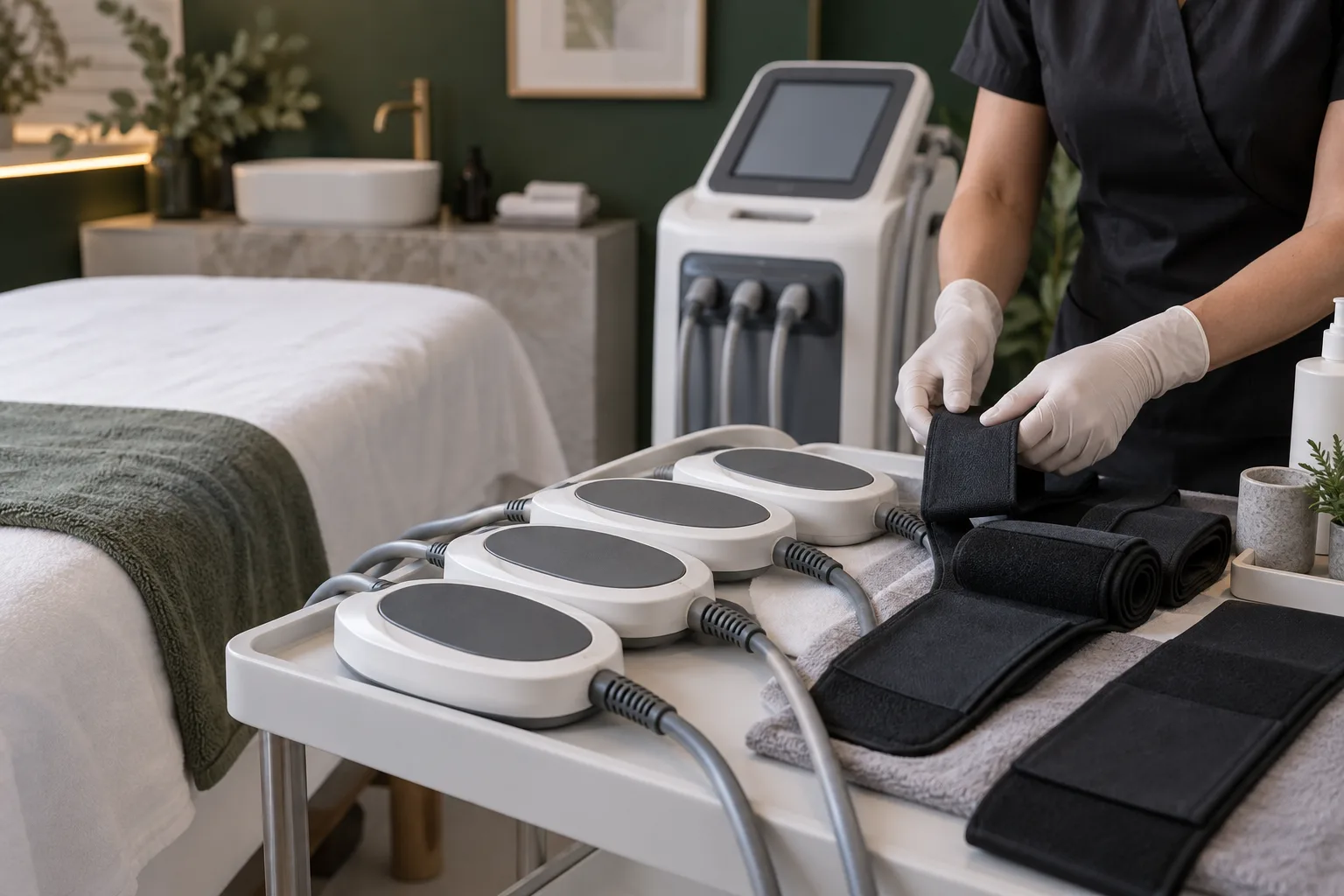
Clean applicators and straps according to supplier guidance, inspect cables and return every component to its assigned holder.
Preventive engineering
Confirm cooling, cable routing and power before you schedule the room.
Exact requirements vary by model. Review the engineering details before finalising an order so the platform, room layout and planned appointment flow work together.
Cooling architecture: confirm whether air cooling, a Liquid Cooling Loop or another design applies to the selected configuration and its stated duty guidance.
Cables & applicators: verify quoted cable reach, holder layout, routing around the bed and connection instructions.
Power & ventilation: confirm 110V/220V, plug, grounding, clearances and ventilation requirements for the exact model.
Configuration intake
Production-ready details before you compare quotations.
Share your room layout, intended treatment volume and destination requirements. We can then identify the model-specific channel, cooling, chassis and power information you need to review.
Fast-track intake review
Request a tailored EMS platform proposal & configuration dossier.
Chassis & channels
Discuss 2-handle, 4-handle or other configurations suitable for the planned workflow.
Applicator mix
Review flat pads, contoured applicators, a Pelvic Cushion or other options available for suitable projects.
Destination standard
Confirm country, 110V/220V, plug type, UI-language needs and project scope.
Technical & order FAQ
Questions buyers evaluate before finalising EMS machine specifications.
Practical guidance on channel architecture, cooling, applicators and destination configuration. Final capability depends on the selected model and market.
Ready to configure an EMS body-sculpting platform for your room?
Tell us the intended treatment route, room setup, destination and project scope. We will help you focus the proposal on the relevant EMS configuration details.
Request EMS specs & quotation