

Clinical diode laser systems
Diode lasers built for a full clinic schedule.
Specify diode laser platforms around 755nm / 808nm / 1064nm wavelength options, sapphire contact cooling and the laser bar’s stated service life. Match the configuration to your client profile and daily booking volume.
Request laser datasheet & power curves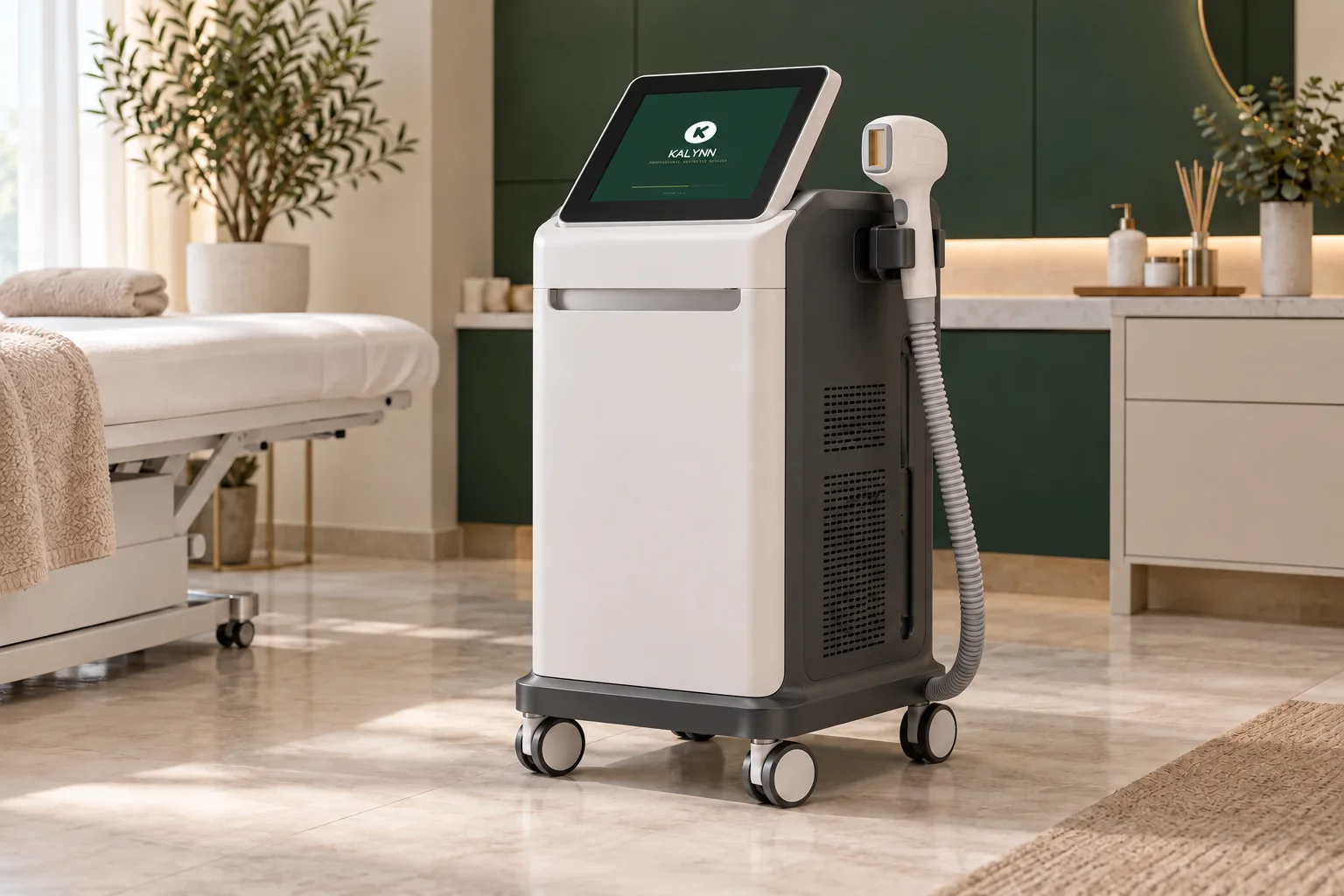
DIODE LASER WORKSTATION / WAVELENGTHS & POWER CONFIGURATION
755 / 808 / 1064nm output
Confirm the exact wavelength combination and delivery architecture.
Sapphire contact cooling
Review contact temperature under the quoted operating conditions.
Laser bar service life
Request rated lifespan, test conditions and replacement terms.
Optical precision
Optical configurations matched to your client mix.
Review wavelength delivery, contact geometry and operating modes alongside the model’s intended-use guidance for the Fitzpatrick skin types your clinic serves.
LASER WAVELENGTHS
Triple-wavelength delivery
Discuss 755nm, 808nm and 1064nm output where offered. Confirm the wavelength mix, delivery method and model-specific client suitability.
TREATMENT APPLICATOR
Interchangeable spot options
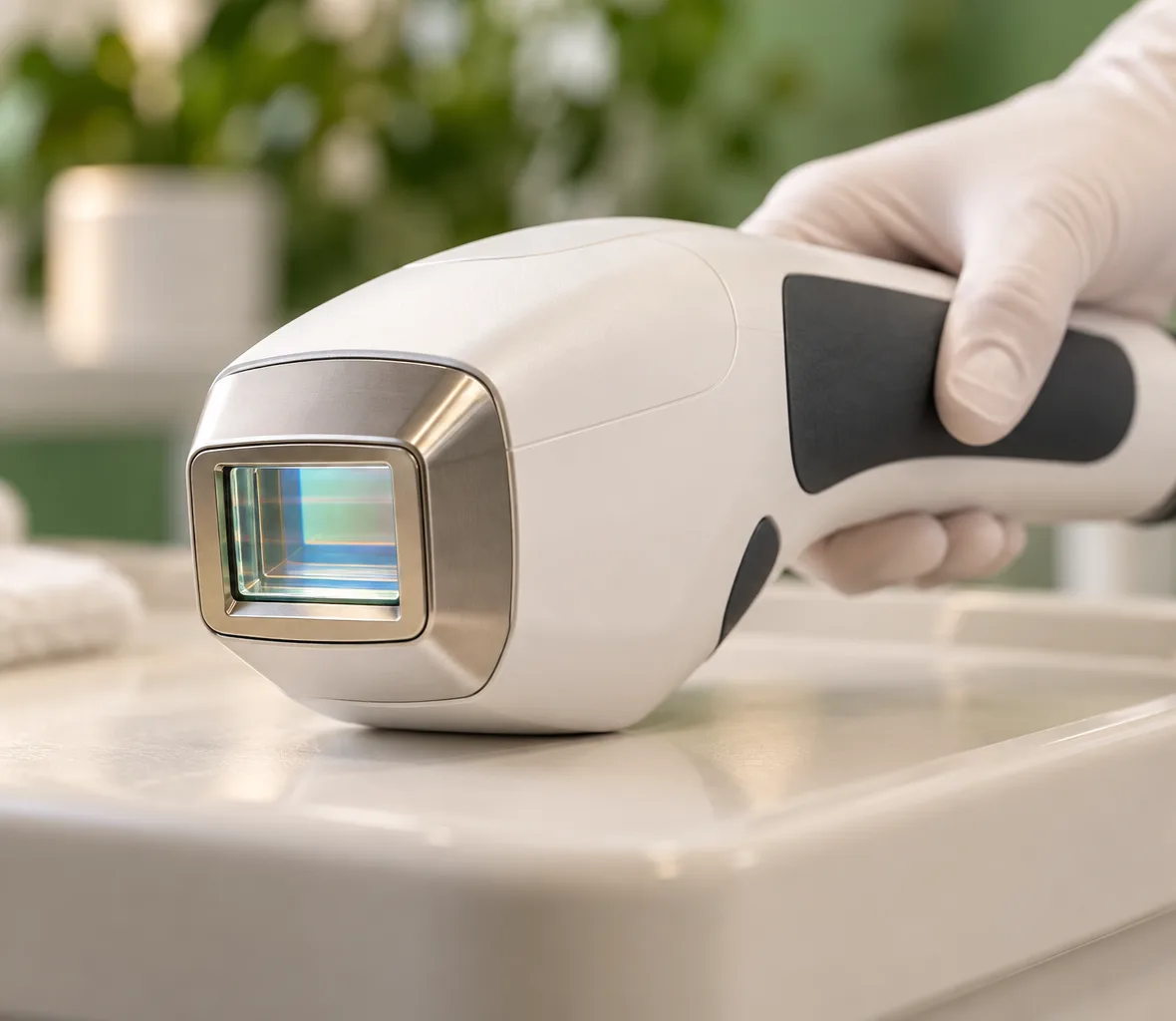
Review larger contact windows for body areas and precision attachments for smaller areas. Confirm the quoted dimensions, connection and intended use.
CLINICAL PROTOCOLS
In-motion operating modes
Request the available repetition rates, pulse-duration range and treatment-mode guidance. Compare these settings with cooling performance and operator handling.
Thermal management & longevity
Contact cooling for your daily treatment schedule.
Review sapphire contact cooling and the internal cooling circuit together. Confirm the operating limits and maintenance routine for the appointment pattern you plan to run.
Sapphire light guide
Confirm contact material, optical window dimensions and the stated temperature range under defined conditions.
TEC, water & air cooling
Review the actual cooling architecture, pump and radiator specification, coolant requirements and temperature monitoring.
Modular handpiece connections
Discuss connection type, replacement procedure and servicing arrangements before choosing the final handpiece package.
Infrastructure & safety
Prepare the power and cooling your room needs.
Share your facility’s electrical supply and installation requirements so the quoted console can be reviewed against the actual treatment-room setup.
Power & grid adaptation
Confirm 110V or 220V, frequency, electrical load and the power-module specification supplied with the selected model.
Water quality protection
Review coolant quality, filtration, flow monitoring and the alerts or maintenance procedures included in the configuration.
Clinical onboarding
Confirm training materials and protective eyewear appropriate to every supplied wavelength. List practitioner and client protection separately.
Build your quotation
Request a diode laser proposal & optical test report.
Specify your daily booking volume and client profile. Request applicable output data, handpiece drawings and an itemized quotation for the selected platform.
Optical power output
Share your required bar-stack configuration. Confirm whether quoted wattage describes optical output or electrical input.
Wavelength selection
Dedicated 808nm or a 755nm / 808nm / 1064nm combination, subject to the selected configuration.
Console architecture
Discuss desktop, wheeled or dual-handpiece requirements alongside room space, installation and servicing needs.
Technical & order FAQ
Practical guidelines for diode laser procurement.
Plan your diode laser configuration.
Share your client profile, booking volume and destination to discuss the optical package, cooling setup and quotation.